Category: Education

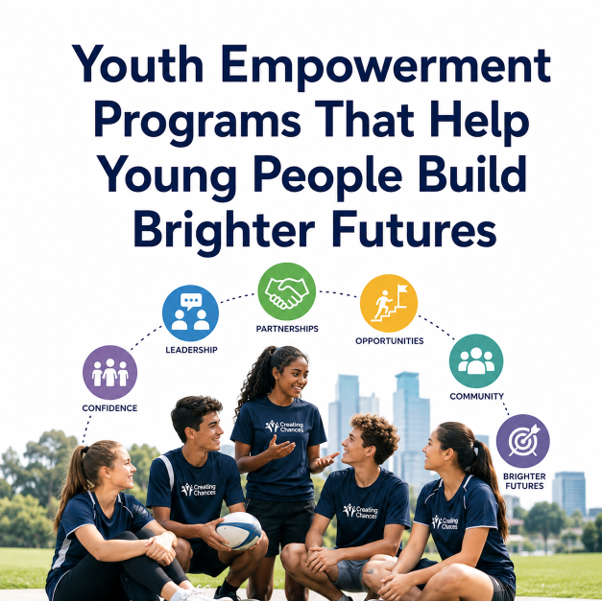
  • Youth Empowerment Programs That Help Young People Build Brighter Futures

    Youth Empowerment Programs That Help Young People Build Brighter Futures

    Young people thrive when they have the confidence, skills, and support to overcome challenges and achieve their goals. A well-designed youth empowerment program gives young people the opportunity to develop leadership skills, strengthen resilience, build positive relationships, and prepare for future success.

    While individual programs can make a meaningful difference, long-term impact is created through purposeful partnerships. When schools, businesses, community organisations, and local communities work together, they create opportunities that empower young people both inside and outside the classroom.

    At Creating Chances, we believe every young person deserves access to experiences that build confidence, encourage participation, and create pathways for lifelong success.

    What Is a Youth Empowerment Program?

    A youth empowerment program is designed to help young people develop the knowledge, confidence, and practical life skills they need to succeed in education, employment, and everyday life. Rather than focusing only on academic achievement, these programs support personal growth by encouraging leadership, teamwork, communication, and resilience.

    Effective programs create safe and inclusive environments where young people can:

    • Build self-confidence
    • Develop leadership skills
    • Strengthen communication
    • Improve decision-making
    • Build positive relationships
    • Increase community participation

    When delivered consistently, youth empowerment programs help young people become active contributors within their schools and communities.

    Why Youth Empowerment Matters

    Today’s young people face a wide range of social, emotional, and educational challenges. Building confidence and resilience early helps them respond positively to these challenges while preparing them for future opportunities.

    A quality youth empowerment program helps participants:

    • Develop greater self-belief.
    • Improve emotional wellbeing.
    • Build resilience through practical experiences.
    • Strengthen teamwork and collaboration.
    • Develop leadership capabilities.
    • Feel connected to their community.

    Empowered young people are more likely to participate confidently at school, engage with their communities, and build positive futures.

    How Purposeful Partnerships Strengthen Youth Empowerment Programs

    The most successful youth empowerment programs are rarely delivered by one organisation alone. They are strengthened through purposeful partnerships that bring together schools, businesses, community organisations, local councils, and not-for-profits.

    Each partner contributes something valuable.

    Schools

    Provide trusted learning environments where students can participate in meaningful personal development programs.

    Businesses

    Offer mentoring, workplace experiences, volunteering opportunities, and industry knowledge that prepare young people for future careers.

    Community Organisations

    Create inclusive programs that reflect local community needs while supporting young people from diverse backgrounds.

    Government and Local Partners

    Help expand program reach through strategic investment and collaboration across communities.

    Together, these purposeful partnerships create stronger support networks that allow young people to develop skills, confidence, and resilience in real-world settings.

    Benefits of a Youth Empowerment Program

    When young people receive the right support, the benefits extend far beyond the classroom.

    A well-designed youth empowerment program helps:

    • Build confidence and self-esteem.
    • Develop leadership and communication skills.
    • Improve teamwork and collaboration.
    • Encourage positive decision-making.
    • Strengthen resilience during challenges.
    • Increase school and community engagement.
    • Promote inclusion and belonging.
    • Prepare young people for future education and employment opportunities.

    These outcomes create stronger individuals while contributing to healthier and more connected communities.

    Why Organisations Invest in Purposeful Partnerships

    Organisations increasingly recognise that supporting young people creates long-term benefits for the entire community.

    Through purposeful partnerships, organisations can:

    • Create meaningful social impact.
    • Support youth wellbeing and development.
    • Strengthen local communities.
    • Encourage employee volunteering.
    • Share knowledge and professional expertise.
    • Contribute to sustainable community outcomes.

    Purposeful partnerships allow organisations to become active contributors to positive change while helping young people access opportunities they may not otherwise receive.

    Why Schools and Communities Choose Creating Chances

    Creating Chances works alongside schools, businesses, and community organisations to deliver evidence-based youth empowerment programs that help young people develop confidence, leadership, and resilience through sport and education.

    Our collaborative approach focuses on creating lasting outcomes through purposeful partnerships built on shared goals and measurable community impact.

    Organisations choose Creating Chances because we offer:

    • Evidence-based youth development programs.
    • Strong partnerships with schools and communities.
    • Inclusive program delivery.
    • Experienced facilitators.
    • Practical life skills through sport.
    • Long-term measurable social outcomes.

    Every program is designed to help young people realise their potential while strengthening the communities they belong to.

    Empower Young People Through Purposeful Partnerships

    Creating brighter futures requires collaboration, commitment, and a shared vision. A well-designed youth empowerment program, supported by purposeful partnerships, creates opportunities that help young people develop confidence, resilience, leadership, and lifelong skills.

    By working together, schools, businesses, community organisations, and local partners can create lasting positive change that benefits not only today’s young people but future generations as well.


  • Access Professional Resources for Patient Transport pdf astna eBook

    Access Professional Resources for Patient Transport pdf astna eBook

    Accessing professional resources for patient transport is crucial for healthcare providers, emergency medical technicians (EMTs), and other professionals involved in the safe and efficient movement of patients. The “Access Professional Resources for Patient Transport” PDF eBook by the Air & Surface Transport Nurses Association (ASTNA) serves as an invaluable tool in this regard, offering comprehensive guidance and support to those working within this specialized field.

    Patient transport, whether via air or ground, involves a multitude of complex processes that require precise coordination and expert knowledge. This eBook aims to provide its readers with a thorough understanding of these processes by covering essential topics such as safety protocols, best practices in patient handling, communication strategies during transport, and the latest technological advancements in the field.

    One significant advantage of accessing this resource is its focus on up-to-date information reflecting current standards and innovations. As healthcare evolves rapidly with new technologies and methodologies continually emerging, staying informed about these changes ensures that professionals can deliver optimal care during Patient Transport pdf astna eBook addresses these advancements comprehensively, helping practitioners integrate them into their daily operations effectively.

    Moreover, this resource emphasizes the importance of interdisciplinary collaboration among various stakeholders involved in patient transport. It provides insights into how different team members—ranging from nurses to pilots—can work together seamlessly to ensure patient safety throughout the journey. By fostering a collaborative environment where everyone understands their role clearly and communicates efficiently with one another, potential risks can be minimized significantly.

    In addition to technical skills related directly to transportation logistics itself; emotional intelligence plays an equally vital role when dealing with patients who may experience anxiety or distress due either physical discomforts associated long-distance travel unfamiliarity surrounding being moved unfamiliar settings altogether; thus making it imperative caregivers demonstrate empathy compassion towards individuals under care while maintaining professionalism at all times – something which addressed thoroughly within pages provided herein too!

    The accessibility offered through digital format makes obtaining utilizing content straightforward convenient users regardless location time constraints might face otherwise limiting ability attend workshops seminars physically present themselves elsewhere required learnings take place instead simply downloading document onto device preference read leisure suit schedule accordingly without compromising quality education received thereby enhancing overall proficiency skillset possessed already further bolstering confidence levels attained therein subsequently translating better outcomes ultimately achieved end result both personally professionally speaking alike undeniably beneficial manner indeed!

    Overall then if you’re seeking improve enhance capabilities surrounding aspect your chosen career path particularly concerning area involving movement ill injured persons between facilities environments safely securely efficiently possible whilst ensuring utmost dignity respect afforded those entrusted into care along way well worth considering investment made acquiring copy today start reaping benefits tomorrow onwards no doubt sure agree once experienced firsthand exactly what means offer!

  • Theory and Practice of Corporate Communication Explained

    Theory and Practice of Corporate Communication Explained

    Corporate communication is a vital function within any organization, encompassing the strategies and processes used to convey messages both internally among employees and externally to stakeholders, customers, and the public. The theory of corporate communication provides a framework for understanding how organizations manage information flow, build relationships, and maintain their reputation. It emphasizes the importance of consistency in messaging, clarity in delivery, and alignment with organizational goals. At its core, corporate communication theory explores how effective communication can influence perceptions, drive engagement, and support decision-making processes.

    In practice, corporate communication involves various activities such as public relations, media outreach, internal communications, crisis management, Strategy: Theory and Practice, 4th Edition branding efforts. These activities are designed to ensure that an organization’s voice is coherent across all channels and resonates with its target audiences. For instance, internal communications focus on fostering a culture of transparency by keeping employees informed about company developments while encouraging feedback that can improve operations. Externally, corporate communicators work to enhance brand image through press releases or social media campaigns that highlight achievements or address concerns proactively.

    A crucial aspect of applying theory to practice lies in understanding the audience’s needs and tailoring messages accordingly. Communication must be adapted depending on whether it targets investors seeking financial updates or customers interested in product benefits. This requires careful analysis of stakeholder expectations alongside ongoing monitoring of communication effectiveness through metrics like engagement rates or sentiment analysis.

    Another important element is managing crises effectively when unexpected events threaten an organization’s reputation. Theoretical models suggest that timely response coupled with transparent information sharing helps mitigate damage while preserving trust among stakeholders. Practically speaking, this means having predefined protocols for rapid coordination between departments responsible for legal advice, media relations, and executive leadership during emergencies.

    Technology also plays a significant role in shaping modern corporate communication practices by enabling real-time interaction through digital platforms such as email newsletters or social media channels. These tools facilitate two-way dialogue rather than one-sided announcements typical of traditional methods; they empower companies to listen actively as well as broadcast messages efficiently.

    Ultimately, successful corporate communication integrates theoretical principles with practical execution tailored to specific organizational contexts. It requires strategic planning supported by clear objectives aligned with business priorities alongside flexibility to adapt tactics based on feedback or changing circumstances. By bridging theory with practice effectively within this discipline organizations can foster stronger relationships internally while enhancing their external reputation over time-key drivers for sustainable growth in today’s competitive environment.